Electric vehicle owners are often told that charging at night saves money. For some households that is true and valuable. For others it makes no difference at all. Whether it matters depends on one thing: how your utility prices electricity through the day.
Smart chargers are sold as the tool for taking advantage of that. They are not the only tool, and they are not always necessary. This guide explains how time-based pricing works and what a smart charger adds to it.
Two neighbours drive the same car. One plugs in at six in the evening; the other lets the car wait until after midnight. On a time-of-use plan their bills differ, though the miles are identical. The only difference is a setting.
In this guide
How time-of-use pricing works
Under a standard flat rate, electricity costs the same at every hour. Under a time-of-use rate, the price changes with the time of day, and often with the season and the day of the week. Electricity is cheaper when overall demand is low, typically overnight, and more expensive during the late afternoon and early evening, when demand peaks.
An electric vehicle is unusually well suited to this kind of pricing. Unlike a dishwasher, which people run when they want, a car typically sits for many hours and needs its energy only by morning. Moving charging to the cheap hours costs nothing in convenience.

There are several variants, and utilities describe them differently, so read your own plan carefully:
- Time-of-use rates. Defined periods, such as off-peak, mid-peak and peak, each with its own price.
- Electric vehicle rates. Some utilities offer rate plans designed for owners, often with a very cheap overnight period, sometimes with a separate meter for the charger.
- Demand charges. Some plans, more often for commercial customers but not exclusively, charge for the highest rate of power you draw in a period, not only for the total energy. A high-power charger running during a busy time can raise that peak.
- Tiered rates. Prices that rise as you use more in a month. Adding a car can push you into a higher tier.
Rates and rules differ between utilities and change. Ask your utility which plans are available, how they are structured, and whether there are conditions on switching. We do not state any price or rate here, because it would not be accurate for your area.
Three ways to charge off-peak
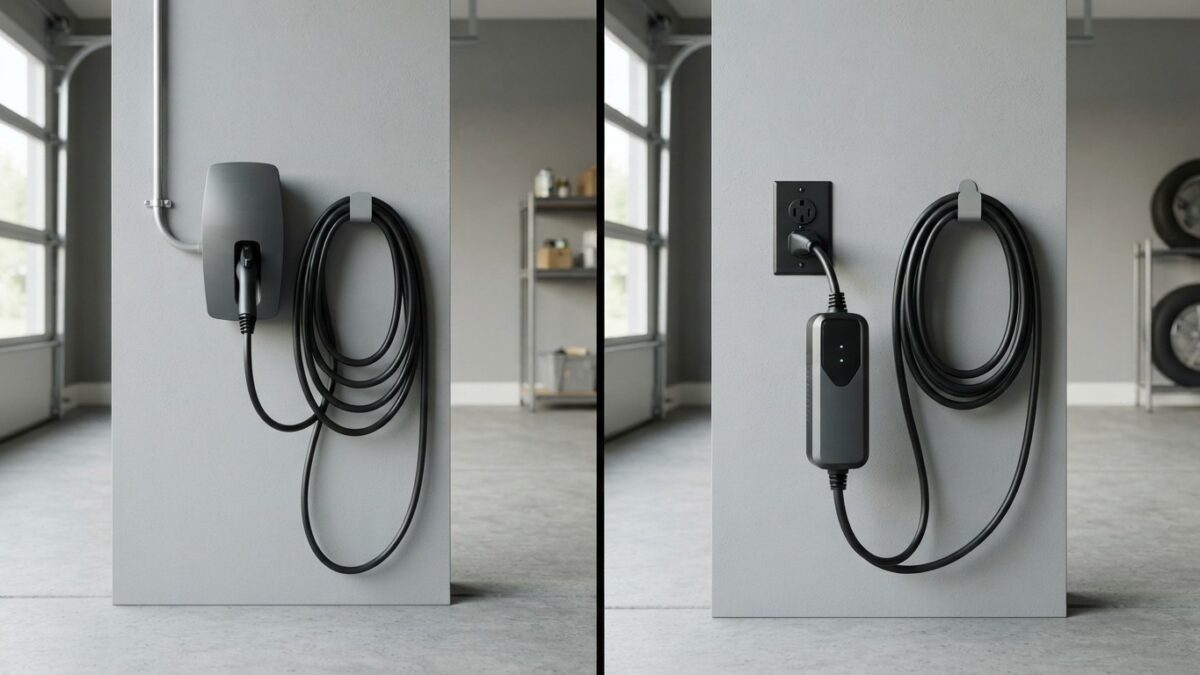
- The vehicle’s own scheduler. How it works: Set charging times in the car’s settings or app. Strengths: Free, built in, works with any charger. Weaknesses: Depends on the car’s software; may need re-entering after updates.
- A timer-based charger. How it works: A charger with a built-in schedule. Strengths: Works regardless of the car. Weaknesses: Fixed schedule; may not adjust to rate changes.
- A smart charger with an app. How it works: A connected charger scheduled and monitored from a phone. Strengths: Detailed control, usage reports, may connect to utility programmes. Weaknesses: Costs more; depends on Wi-Fi and the maker’s software.
For many owners the vehicle’s own scheduler is all they need. Most electric cars let you choose a departure time or a charging window, and they will begin and end charging accordingly. If you do not need data or advanced features, this approach costs nothing.
What a smart charger adds
A connected charger offers several things that a plain one does not. Whether they are worth paying for depends on your circumstances.
- Scheduling independent of the car. Useful if you have more than one vehicle, or a car whose scheduling is awkward.
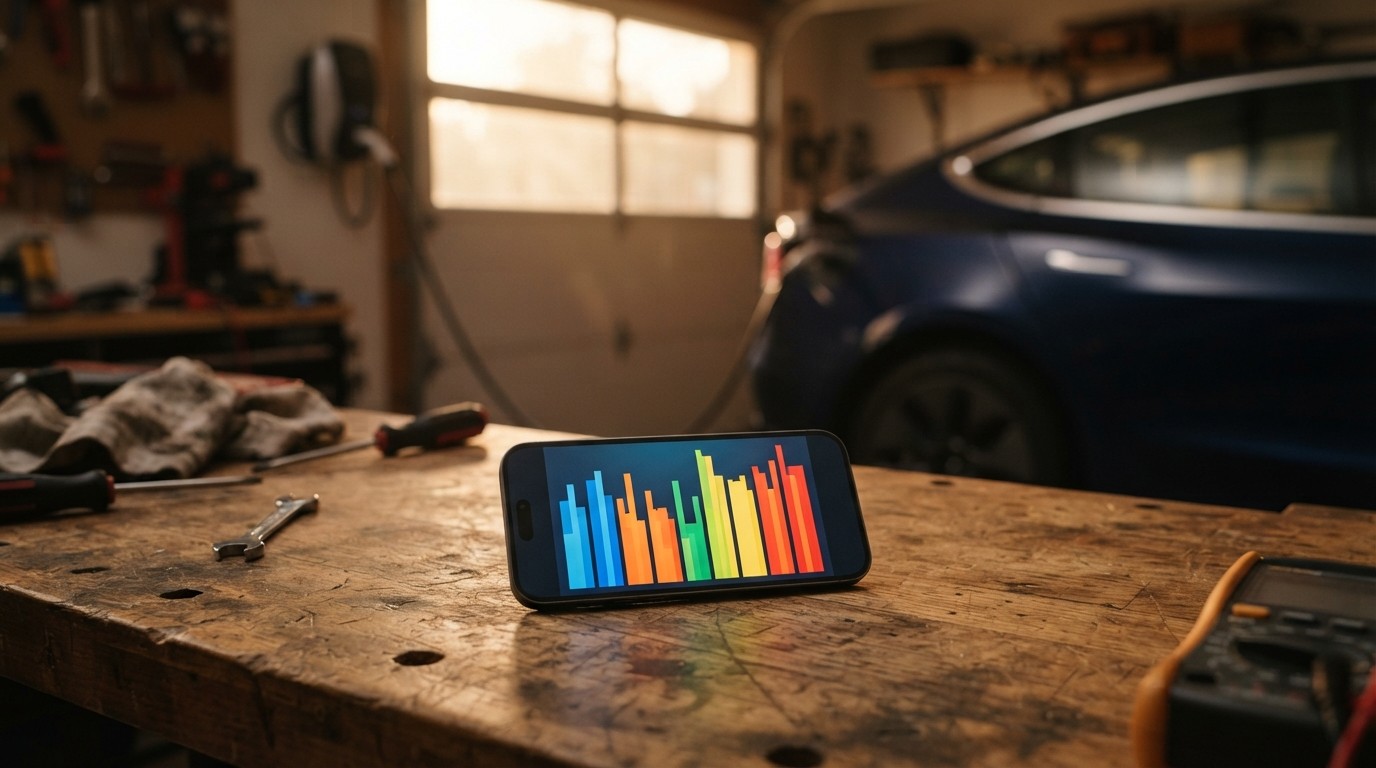
- Usage reporting. You can see how much energy was used, when, and often at what cost. This is useful for checking your rate plan, and for reimbursing charging at work or for a company vehicle.
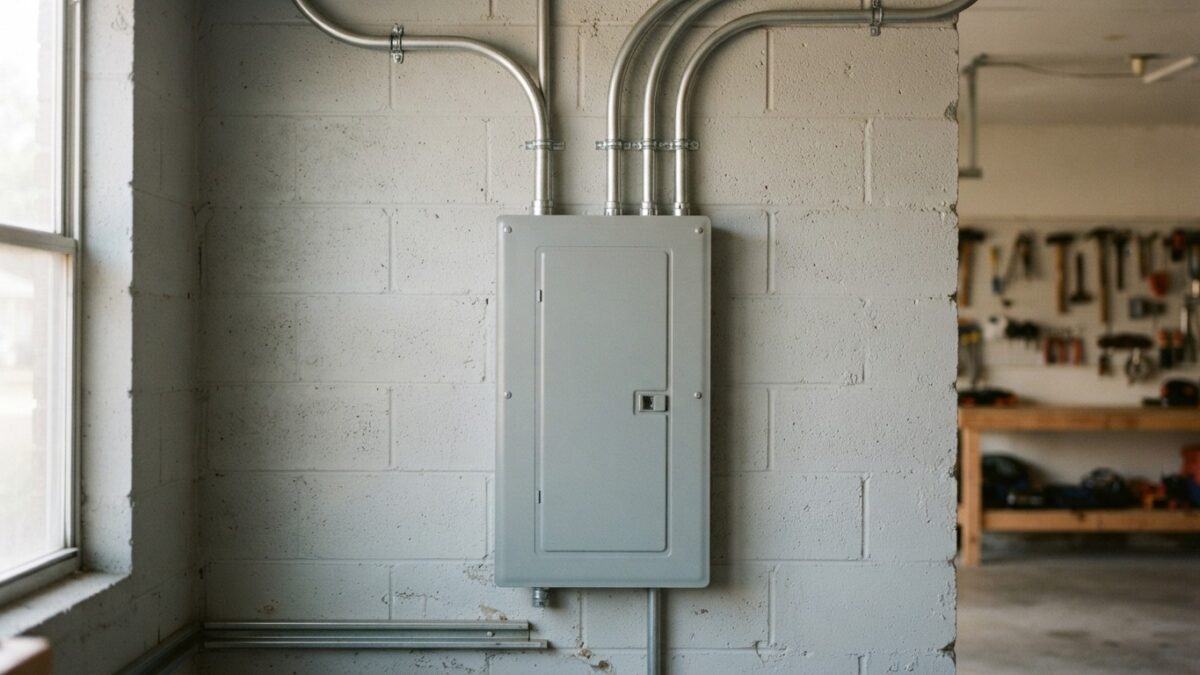
- Load management. Some chargers can adjust their output according to the home’s other loads, or share capacity between two chargers. This can reduce the need for an electrical upgrade, as we explain in our article on panel capacity. It requires the installer’s approval and may have local requirements.
- Utility programme participation. Some utilities run programmes in which a connected charger shifts or reduces charging at times of high demand in exchange for a reward or special rate. Whether one is available and what it offers is a matter for your utility, and we do not state what any programme pays.
- Solar coordination. Some chargers can prioritise charging when your own panels are producing.
- Security and access control. Locking the charger or requiring authorisation, which matters in shared parking.
The downsides of connected equipment
- Dependence on connectivity. If Wi-Fi drops, many chargers keep their last schedule, but some features stop. Check what happens offline.
- Dependence on the manufacturer. The app and the cloud service are maintained by the company. If it changes the service, charges a subscription, or stops supporting the product, features can disappear.
- Software updates. They can improve a charger or change how it works. Know how updates are applied.
- Privacy. A connected device reports on your usage patterns. Read what data the maker collects and how it is used.
- Cost. Smart chargers cost more than basic ones.
Working out whether it is worth it
- Find your rate plan. Are you on a flat rate or a time-of-use plan? If flat, scheduling saves nothing, and the question is whether a different plan would suit you.
- Find the price difference between periods. Look at the actual figures on your utility’s rate page. A small difference means little saving, and a large difference matters.
- Estimate the energy you charge in a month. Your daily energy need, from our guide to charging levels, multiplied by the days you charge.
- Multiply the energy by the price difference. That is the maximum monthly saving from moving all charging to the cheap period.
- Check whether the car’s scheduler does the job. If it does, a smart charger adds only its extra features.
- Weigh those features against the extra cost.
Be realistic. The saving depends entirely on your plan and your driving, and for some households it is substantial while for others it is negligible. Do the arithmetic with your own figures, not those in an advertisement.
Charging habits worth knowing
- Plug in every evening. A habit of topping up avoids needing a long charge in an expensive period.
- Check the scheduler after updates. Vehicle and charger software updates occasionally reset settings.
- Consider a charge limit for daily use. Many manufacturers suggest limiting routine charging to less than a full battery, saving full charges for long trips. Check your owner’s manual for what is recommended for your car.
- Watch for departure-time features. Some cars precondition the cabin or the battery before a set departure time, and using departure scheduling can have the car ready on time without charging during the peak.
- Re-check your plan periodically. Utilities change rates and introduce new plans, and the best one for you may change.
The right question is not whether to buy a smart charger. It is whether your charging is currently happening at the wrong time, and how to fix that most cheaply. For many drivers, the answer is to switch to a time-of-use plan and set the car’s scheduler, which costs nothing. A smart charger earns its place when you want reporting, load management or participation in a utility programme, and you have checked that those are worth what they cost.
Myths worth retiring
Myth: Charging at night is always cheaper.
Reality: Only on a plan that prices night electricity lower. On a flat rate the hour makes no difference.
Myth: I need a smart charger to schedule charging.
Reality: Most cars can schedule charging themselves, at no cost.
Myth: Smart chargers need no upkeep.
Reality: They depend on Wi-Fi, an app and the manufacturer’s cloud service. Ask what happens offline and if the service changes.